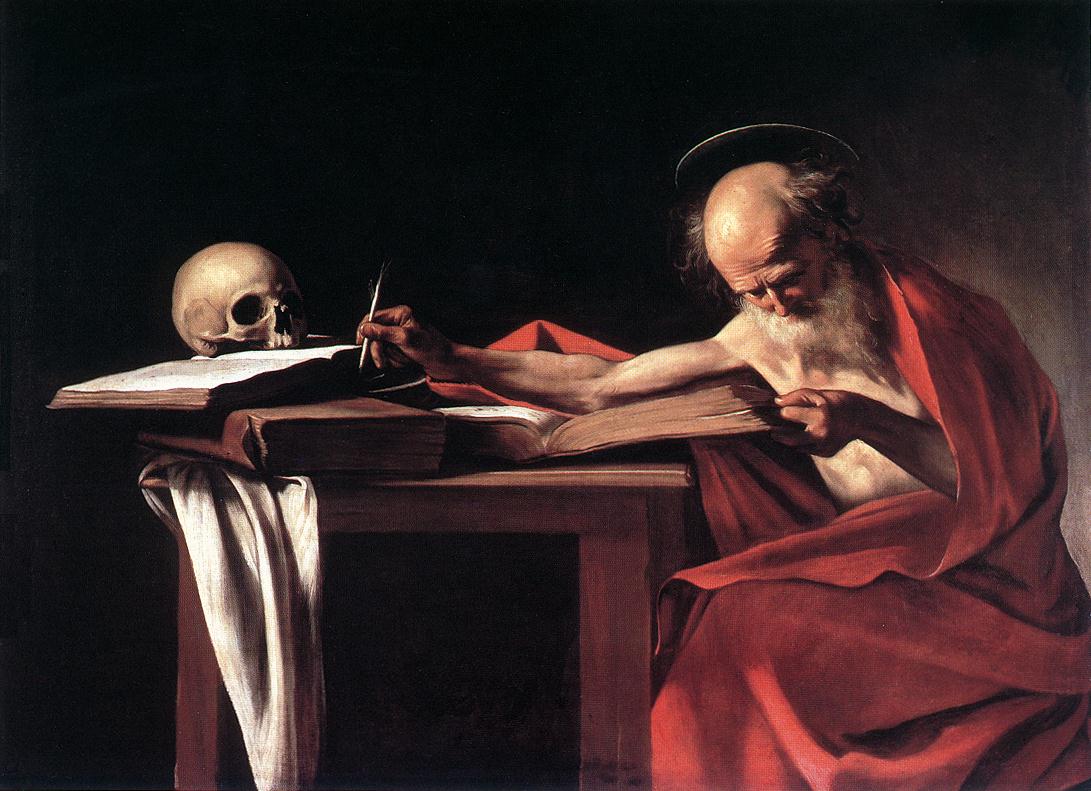
Jerome was a mid 4th to early 5th century church father widely known for his linguistic skill which he utilized to translate the Bible into Latin (the common language of the time). This translation is known as the “Vulgate.” In addition to being a linguist, he was also a historian and theologian. He began a historical work called “Chronicle” in 380 AD. This work was mentioned in my previous post on “Prosper of Aquitaine” as Prosper was a legacy contributor to this work. Jerome was born in Stridon (Dalmatia) in 347 AD and died in 420 AD at Bethlehem. He was a voracious writer and much of his body of work has survived antiquity. His writings consisted many commentaries, letters, homilies and both canonical and extra-canonical translations. The selections for today are taken from “Letter 53.4” and “Homilies on Mathew 85.” I selected these two pieces because they give a good overview of the purpose and focus of the biblical office of prophet/seer, which is simply the revelation of Christ.
The church has real eyes: manifestly its churchmen and teachers who see in the holy Writ the mysteries of God, and to them applies that scriptural appelation of “seer.” It is correct, then, to call these seers the eyes of the church. Homilies on Matthew 85
In him [Christ] are hidden all the treasures of wisdom and knowledge. He also who was hidden in a mystery is the same that was foreordained before the world. Now it was in the law and in the prophets that he was foreordained and prefigured. For this reason too the prophets were called seers, because they saw him who others did not see. Letter 53.4
As stated earlier, Jerome was a prolific writer and thus will be a regular guest in the “Introducing the Church Fathers” series.