Church Fathers

Introducing the Church Fathers – Jerome

st-jerome

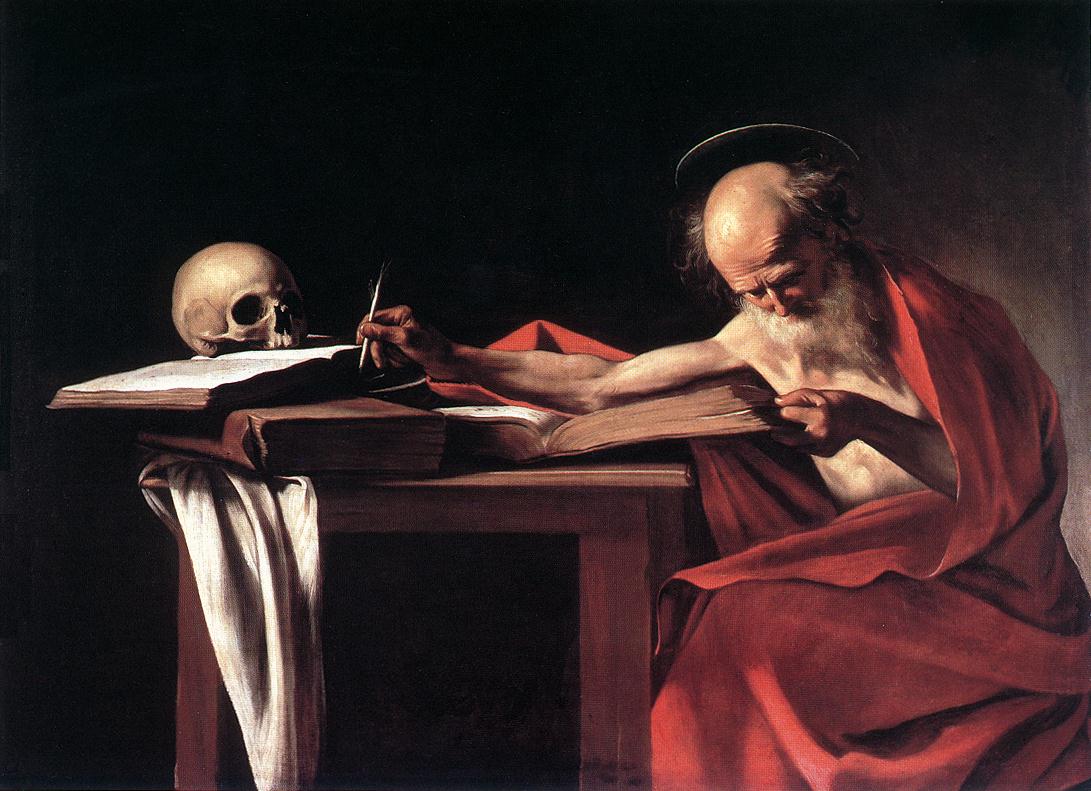
Jerome was a mid 4th to early 5th century church father widely known for his linguistic skill which he utilized to translate the Bible into Latin (the common language of the time). This translation is known as the “Vulgate.” In addition to being a linguist, he was also a historian and theologian. He began a historical work called “Chronicle” in 380 AD. This work was mentioned in my previous post on “Prosper of Aquitaine” as Prosper was a legacy contributor to this work. Jerome was born in Stridon (Dalmatia) in 347 AD and died in 420 AD at Bethlehem. He was a voracious writer and much of his body of work has survived antiquity. His writings consisted many commentaries, letters, homilies and both canonical and extra-canonical translations. The selections for today are taken from “Letter 53.4” and “Homilies on Mathew 85.” I selected these two pieces because they give a good overview of the purpose and focus of the biblical office of prophet/seer, which is simply the revelation of Christ.

The church has real eyes: manifestly its churchmen and teachers who see in the holy Writ the mysteries of God, and to them applies that scriptural appelation of “seer.” It is correct, then, to call these seers the eyes of the church. Homilies on Matthew 85

In him [Christ] are hidden all the treasures of wisdom and knowledge. He also who was hidden in a mystery is the same that was foreordained before the world. Now it was in the law and in the prophets that he was foreordained and prefigured. For this reason too the prophets were called seers, because they saw him who others did not see. Letter 53.4

As stated earlier, Jerome was a prolific writer and thus will be a regular guest in the “Introducing the Church Fathers” series.

Introducing the Church Fathers – Prosper of Aquitaine

Prosper of Acquitaine

Prosper of Aquitaine was a lay theologian born in 390AD.   Although the year of his death is uncertain, many scholars believe it was sometime between 455AD and 465AD.  Prosper was born in Aquitaine which is the southwestern metropolitan region of France.  Following in the footsteps of Hippo of Augustine’s debate with Pelagius and his followers, Prosper primarily wrote against the semi-pelagian heresy that was gaining popularity in the fifth century.  In addition to his contributions on soteriology, he was also a continuator of Jerome’s historical work called “The Universal Chronicle.”  His contributions are viewed as important due to a general lack of historical documentation from his time period.  The selection of today’s post is Chapter 8 from his book “The Call to All Nations.”  This is a fantastic book and one of his later writings. This book was recognized by Caesarius of Arles at the Council of Orange as a positive case in denouncing the semi-pelagian heresy.  Martin Luther found this work very helpful in formulating his reformation view of predestination, grace and the will.  If you haven’t read this work, I highly encourage you to get your hands on a copy and make your acquaintance.

Prosper of Aquitaine – The Call to All Nations – Chapter 8

Grace repairs God’s work in such a manner as not to take away free will but rather to heal it by itself.

In Adam our nature existed without blemish, but he by his wilful disobedience incurred many evils and transmitted them to his posterity in whom they were to multiply more and more.  The victory over these evils and their utter destruction only springs from the grace of the saviour who restores His own work with His own labour. For, as the Apostle John says For this purpose the Son of God appeared, that He might destroy the works of the devil. He it is who breaks the chains of the prisoner. He clothes the nakedness of the robbed man, He heals the injuries of the wounded, but all this in such a manner that what He works in him is also effected by man himself.  He indeed cannot risk to fight against his enemy without a protector. He has to wage war against one who once defeated him. He should, therefore, not trust in his own strength which, even when it was unimpaired, did not hold out; but let him seek victory through the One who alone is unconquerable and who brought victory to all. And if he does seek victory, he should not doubt that he has received this very desire of seeking it from Him whom he is seeking. And he should not think that, because he is led by the Spirit of God, he no longer has free will. This he did not lose even when he wilfully surrendered himself to the devil. The devil perverted his judgment that goes with the will, but did not take it from him. What was not taken away by the one who inflicted a wound is still less destroyed by the One who comes to heal. He heals the wound. He does not set aside nature. But what was lost in nature cannot be restored except by its Author; in whose sight what was lost in nature did not perish. He is eternal wisdom, eternal truth, eternal goodness, eternal justice, He is, in short, the eternal light of all virtues, and all that is virtue is God. Unless He works in us, we cannot be partakers of any virtue. For indeed without this Good nothing is good, without this Light nothing is bright, without this Wisdom nothing is wise, without this Justice nothing is right. For the Lord says through the mouth of Isaias, I am, I am the Lord, and there is no one besides me who saves; and Jeremias says, I know, O Lord, that the way of a man is not in him; neither is it in a man to direct his way. Mortal man, born according to the flesh from a source that was cursed in Adam, cannot come to the spiritual dignity of the new birth except through the guidance of the Holy Spirit. Indeed, he cannot even foster any desire for it as long as he has not received from God the ardour of this desire, about which the Lord says, I am come to cast fire on the earth, and what will I, but that it be burning? That fire is the love of God which a lover of the world cannot conceive in his enslaved heart. He is filled with the love of vain things, and even if he could escape these to some extent, and, rising above temporal and visible goods, attain through his own understanding the eternal and invisible ones; even if he could renounce the worship of idols and give up the adoration of heaven and earth and all the created things of this world; even so he would not conceive the faith and the love of Christ, because he would be upset by His lowliness. He would not with his own insight overcome the scandal of our Lord’s nativity and death. For, as the wisdom of the world resists the wisdom of God, thus blinding the pride of the self-conceited, so it pleased God by the foolishness of our preaching to save them that believe. Hence, those who are made arrogant by their worldly learning, think that the Cross of Christ is something to be laughed at rather than adored; and the higher a man rises in the attainments of the human sciences, the more he scorns the humility and feebleness of our preaching. No wonder either, that pagan philosophy opposes the Gospel of the Cross of Christ, when Jewish learning also resists it. We conclude that neither the learned nor the illiterate of whatever race or rank come to God led by human reason; but every man who is converted to God is first stirred by God’s grace. For man is no light unto himself, nor can he inflame his own heart with a ray of his own light. If Saint John than whom no son of men was greater, was not the light because he did not shine with his own brightness, but had received the power to enlighten others from the true Light which enlighteneth every man that cometh into this world: what man is there who would give up so many conflicting opinions, so many constraining habits, so many inveterate prejudices, relying only on his own judgment and helped solely by the spoken word of a teacher? Grace would then consist only in the exterior hearing of the doctrine and the whole of a man’s faith would spring from his own will If such were the case, there would be no difference between grace and the Law; and the spirit of forgiveness would enliven no one if the letter that kills remained. For indeed the Law commands things to be done or avoided, but it does not help one to do or to avoid them. Its rigour is complied with not out of free choice but out of fear. But the Lord with a view not to destroy but to fulfill the Law, through the help of His grace, made the command of the Law effective, and through the abundance of His clemency lifted its penal sanction so that He might not avenge sin with punishments, but destroy it through forgiveness. That is why the adulterous woman whom the Law prescribed to be stoned, was set free by Him with truth and grace, when the avengers of the Law frightened with the state of their own conscience had left the trembling guilty woman to the judgment of Him who had come to seek and save what was lost. And for that reason He, bowing down that is, stooping down to our human level and intent on the work of our reformation-wrote with His finger on the ground in order to repeal the Law of the commandments with the decrees of His grace and to reveal Himself as the One who had said, I will give my laws in their understanding and I will write them in their heart. This indeed He does every day when He infuses His will into the hearts of those who are called, and when with the pen of the Holy Spirit the Truth mercifully rewrites on the pages of their souls all that the devil enviously falsified. Whenever, then, the word of God enters into the ears of the body through the ministry of the preachers, the action of the divine power fuses with the sound of a human voice, and He who is the inspirer of the preacher’s office is also the strength of the hearer’s heart. Then the food of the word becomes sweet to the soul; the darkness of old is expelled by the new light; the interior eye is freed from the cataracts of the ancient error; the soul passes from one will to another, and although the will that is driven out lingers on for a while, yet the newborn one claims for itself all that is better in man, so that the law of sin and the law of God do not dwell in the same way and together in the same man. And then, whilst the flesh lusteth against the spirit and the spirit also resists the desires of the flesh, the tempter ventures to ambush man through exterior objects; but the mind strong with God’s help prevails. For, obviously, there are occasions for struggle and these serve the great profit of the faithful: their weakness is buffeted that their holiness may not yield to pride. Hence, too, the Apostle says: Lest in the greatness of the revelations I should be exalted, there was given me . . . an angel of Satan to buffet me. For which thing thrice I besought the Lord that it might depart from me, but He said to me: My grace is sufficient for thee, for power is made perfect in infirmity. Let, then, the Lord seek His image; let the Good Shepherd find His erring sheep and not disdain to bear it, sick and tired for long of the trackless wilds, on His shoulders, and save it not only by calling it back, but also by carrying it along. Let the Lord seek His image, wash away from it all accumulated uncleanness that has stained it and so brighten up the mirror of the human heart. For it is written: Who can make clean that is conceived of unclean seed? Is it not Thou who only art? Let the Lord seek His image that in its renovation and justification the grace of its Reformer may appear, as the Apostle Paul testifies to have happened to himself when he says: And I was unknown by face to the churches of Judea, which were in Christ. . . . They had heard only that he who persecuted us in times past doth now preach the faith which . . .he impugned. And they glorified God in me. Such was the conviction of the Christian people at that time, such the belief of the first members of the Church who had but one heart and one soul: when they saw a man converted from his error to the acceptance of the truth, they gave glory to God and confessed that the convert’s faith came from a divine gift. The Lord Himself when instructing His disciples, the teachers of all nations, said: So let your light shine before men, that, seeing your good works, they may magnify your Father who is in heaven.
Introducing the Church Fathers – Maximus of Turin

ImageThere is not much surviving information concerning the life of Maximus of Turin.  He was born sometime in the mid to late 4th century (estimated about 380 AD) and died in the mid 5th century (estimated about 465 AD).  We was an Italian bishop and theologian.  According to Patrick Comerford…”He (Maximus of Turin) is the author of numerous discourses, including 118 homilies, 116 sermons, and six treatises or tracts.” The selection chosen below is from “Sermon 85.3” and discusses the the armor of God (Ephesians 6:10-18), the battle narrative of David and Goliath (1 Samuel 17) and weaves them together through the person and work of Jesus Christ (Psalms 118:22, 1 Peter 2:7-8). The ability to find Jesus in the midst of Old Testament narrative was commonplace with our church fathers but sadly, has become a lost art amongst 21st century pastors and theologians.  The hope of this series is not only to bring attention to the writings of these torch bearers of the faith, but to also to help restore the lost art of revealing Jesus in the Old Testament.

“Therefore, brothers, let us arm ourselves with heavenly weapons for the coming judgement of the world: let us gird on the breastplate of faith, protect ourselves with the helmet of salvation, and defend ourselves with the word of God as with a spiritual sword.  For the one who is arrayed with these weapons does not fear present disturbance and is not afraid of future judgement, since holy David, protected with his devotion, killed the very strong and armed Goliath without weapons and struck down the warlike man, girt about with defenses on all sides, by the strength of his faith alone.  For although David did not put on a helmet, strap on a shield, or use a lance, he killed Goliath.  He killed him, however, not with an iron spear but with a spiritual sword, for although he appeared weaponless in the eyes of human beings, yet he was adequately armed with divine grace. But the spiritual sword itself was not a sword, since it was not by the sword but by a stone that Goliath died when he was struck down. We read in the Scriptures that Christ is figuratively designated by the word stone, as the prophet says: “The stone that the builders rejected has become the head of the corner.” Therefore when Goliath was struck by a stone, he is struck down by the power of Christ.  And in what part of the body is he struck?  On the forehead, for when the sacrilegious man is struck, there Christ was absent, and where his end comes upon him, there the sign of salvation is not to be found. For although Goliath was protected by weapons on all sides, still his forehead was exposed to death because it did not carry the Savior’s seal, and therefore he is slain in the spot where he is found to be bare of God’s grace.  But there is no one who does not realize that this took place figuratively.  For David had also put on armor beforehand but, since he was so heavy and awkward in it that he could hardly walk, he removed it at once, signifying that the weapons of the world are vain and superfluous things and that the person who chooses to involve themselves in them will have no unimpeded road to heaven, since he will be too heavy and encumbered to walk.  At the same time this teaches us that victory is not to be hoped for from arms alone but is to be prayed for in the name of the Savior.”  Sermon 85.3

Introducing the Church Fathers – Melito of Sardis

Image

Melito of Sardis was the mid to late second century bishop of Sardis (currently located in modern day Turkey). He was a contemporary of Tertulian and served under the Roman rule of Marcus Aurelius. Unfortunately, apart from his homily on the Passover, only fragments of his writings survived antiquity. Thankfully, these works were preserved through the writings of Jerome and Eusebius. In addition to preserving these works, Jerome also credits Melito with establishing the Old Testament canon. As we are in the midst of Easter season, I found it fitting to post a couple excerpts from Melito’s Passover homily. While the entire homily is excellent (found here) these excerpts loudly and unabashedly proclaim the dual nature of Christ Jesus, His death and resurrection. I hope you enjoy them as much as I.

“Pay attention, all families of the nations, and observe! An extraordinary murder has taken place in the center of Jerusalem, in the city devoted to God’s law, in the city of the Hebrews, in the city of the prophets, in the city thought of as just. And who has been murdered? And who is the murderer? I am ashamed to give the answer, but give it I must. For if this murder had taken place at night, or if he had been slain in a desert place, it would be well to keep silent; but it was in the middle of the main street, even in the center of the city, while all were looking on, that the unjust murder of this just person took place. And thus he was lifted up upon the tree, and an inscription was affixed identifying the one who had been murdered. Who was he? It is painful to tell, but it is more dreadful not to tell. Therefore, hear and tremble because of him for whom the earth trembled. The one who hung the earth in space, is himself hanged; the one who fixed the heavens in place, is himself impaled; the one who firmly fixed all things, is himself firmly fixed to the tree. The Lord is insulted, God has been murdered, the King of Israel has been destroyed by the right hand of Israel. O frightful murder! O unheard of injustice! The Lord is disfigured and he is not deemed worthy of a cloak for his naked body, so that he might not be seen exposed. For this reason the stars turned and fled, and the day grew quite dark, in order to hide the naked person hanging on the tree, darkening not the body of the Lord, but the eyes of men. Yes, even though the people did not tremble, the earth trembled instead; although the people were not afraid, the heavens grew frightened; although the people did not tear their garments, the angels tore theirs; although the people did not lament, the Lord thundered from heaven, and the most high uttered his voice.”

“But he arose from the dead and mounted up to the heights of heaven. When the Lord had clothed himself with humanity, and had suffered for the sake of the sufferer, and had been bound for the sake of the imprisoned, and had been judged for the sake of the condemned, and buried for the sake of the one who was buried,he rose up from the dead, and cried aloud with this voice: Who is he who contends with me? Let him stand in opposition to me. I set the condemned man free; I gave the dead man life; I raised up the one who had been entombed. Who is my opponent? I, he says, am the Christ. I am the one who destroyed death, and triumphed over the enemy, and trampled Hades under foot, and bound the strong one, and carried off man to the heights of heaven, I, he says, am the Christ. Therefore, come, all families of men, you who have been befouled with sins, and receive forgiveness for your sins. I am your forgiveness, I am the passover of your salvation, I am the lamb which was sacrificed for you, I am your ransom, I am your light, I am your saviour, I am your resurrection, I am your king, I am leading you up to the heights of heaven, I will show you the eternal Father, I will raise you up by my right hand. This is the one who made the heavens and the earth, and who in the beginning created man, who was proclaimed through the law and prophets, who became human via the virgin, who was hanged upon a tree, who was buried in the earth, who was resurrected from the dead, and who ascended to the heights of heaven, who sits at the right hand of the Father, who has authority to judge and to save everything, through whom the Father created everything from the beginning of the world to the end of the age. This is the alpha and the omega. This is the beginning and the end–an indescribable beginning and an incomprehensible end. This is the Christ. This is the king. This is Jesus. This is the general. This is the Lord. This is the one who rose up from the dead. This is the one who sits at the right hand of the Father. He bears the Father and is borne by the Father, to whom be the glory and the power forever. Amen.”


Introducing the Church Fathers – Gregory of Elvira

ImageGregory of Elvira was the Bishop of Elvira, Spain during the mid to late 4th century (died 392).  Unfortunately many of his writings were lost to antiquity and there remains confusion concerning correct authorship for many of those that survived.   Thankfully his writing titled “The Prostitute viewed from Salvation” persevered.  If you are not familiar with this work, I encourage you to take a few minutes and make your acquaintance. 

The Prostitute viewed from salvation by Gregory of Elvira

“And Joshua the son of Nun, “It says, “sent two spies from Shittim, saying to them ‘Go up and survey the land and Jericho.’ When they arrived in Jericho, the two young men entered the house of a prostitute by the name Rahab and stayed as guests.” Pay attention to the structure of this mystery, most beloved brothers, and ask yourselves why men as great as these, for whom the Lord had performed such great marvels and miracles, entered the house of a woman of ill repute, as if they were unable to lodge elsewhere. They did this not by chance, I believe, but intentionally by prophetic design. For I find this prostitute in many places, not only as a hostess of saints but also as their bride. The most holy prophet Hosea, for instance, was commanded by the Lord to accept a harlot as his wife: “For the Lord said to me, ‘Take for your wife a prostitute and generate children of prostitution.’” Even our Lord and Savior himself, when he had sat down by the well in Samaria, conversed with an immoral woman to whom no one had previously spoken there. After he said to her, “You have had five husbands and the one you have now is not your husband,” she believed that he was the Messiah, that is, she confessed him to be the Christ. Then there was the harlot who washed the Savior’s feet with her tears and wiped them with her hair and anointed them while kissing them. Let us see, therefore, what our hostess represents. This Rahab, although she is called a prostitute, nevertheless is a sign of the virgin church, considered as a foreshadow of the coming realities at the end of the age, where she alone is preserved to life among all who are perishing. For even when it was said to the prophet Hosea, “Take for your wife a prostitute,” surely then the image of the church as coming from Gentiles was being prefigured, given that the people were to be gathered from the harlotry of the nations and from the prostitution of idols, for, it says, “they prostituted themselves to strange gods.” Indeed, she is called “the church” because the Greek word ecclesia means “gathering of the people.” And just as the apostle says, “An unfaithful wife is sanctified through her faithful husband,” so also is the church, coming from the infidelity of the Gentiles and prostitution with idols, sanctified through the body of Christ, of which we are members, as we learn from the same apostolic author. Because the church, as I have often said, gathered from the multitude of Gentiles, was then called a prostitute, therefore the church is found in the figure of Rahab, the hostess of saints.”