 Let’s get right to it… Do we really need youth pastors? Are they necessary? Are they truly helpful? These are rather taboo questions in the context of current church culture. I grew up hearing the mantra “the kids are our future” and rightly so in a sense (Christ is actually our future…), but is the youth pastor and children’s church adequate means for preparing our future generation? (more…)
Author: jonrodebaugh
Join me at the 2015 Brothers of John the Steadfast Conference!
Greetings!
For all of you Confessional Lutheran or Confessional Lutheran curious folks out there, I would like to invite you to the 2015 Brothers of John the Steadfast Conference! It takes place on Friday February 20 through Saturday February 21 in beautiful Naperville, Illinois at Bethany Lutheran Church. The theme of the conference is “When Heterodoxy Hits Home” and will cover the various false teachings that are infiltrating the LCMS. For more information click here…and here…I hope to see you there!
A Christmas Public Service Announcement (… and Venting Session)
I once again find myself in the midst of December internally conflicted.
While I thoroughly enjoy Advent and the ensuing Christmas celebrations that stir a nostalgic concoction of warm memories and tender fellowship, I cannot help but catch a case of the “Bah, humbug’s.” It’s not that I revel in negativity, or remotely desire it. I enjoy spending time with family & friends, looking at the wonderful decorations and watching classic Christmas films. More than all, however, I want to celebrate the coming of Christ and his eventual birth.
So why the negativity you may ask? (more…)
Quietly coming to a town near you…
 This post is strictly for my confessional Lutheran brothers and sisters.
I’ve spent some time researching and writing about a network called FiveTwo. If you are a confessional Lutheran within the LCMS, I encourage you to make your acquaintance with the FiveTwo Network and its founder, LCMS Pastor, Bill Woolsey. My encouragement to familiarize yourself with this pastor and his network is a lesson in discernment. You see, whether you realize it or not, FiveTwo is a church planting network and though it’s not directly funded by our synod, it’s leadership is overwhelmingly comprised of rostered LCMS pastors and their sights are firmly set on transforming our synod. I could write of the vast issues I see within FiveTwo, but for anything to get accomplished we, the confessionals, must take ownership of our synod by educating ourselves about the clear and present dangers within this movement. (more…)
Deja Vu…sort of…
This upcoming Sunday, October 5th, will mark the end of my first year in the Lutheran Church Missouri Synod. It was, and has continued to be a breath of fresh air. It’s not that my previous 16 years in the Christian & Missionary Alliance were terrible. I had sound pastors that cared for me and always pointed me to God’s word, and although we now disagree on several key doctrines, I am still thankful for the care and instruction they gave me. (more…)
I spy something with my little eye…
I spy something with my little eye…
Picture yourself sitting in your favorite church pew.
Do you see it?
It’s right there…
It’s a staple.
It’s not as if you are actively aware of its presence, but you’d probably notice it’s absence.
It’s usually in the front, left hand side of the sanctuary in most US churches. (more…)
Introducing the Church Fathers – Jerome
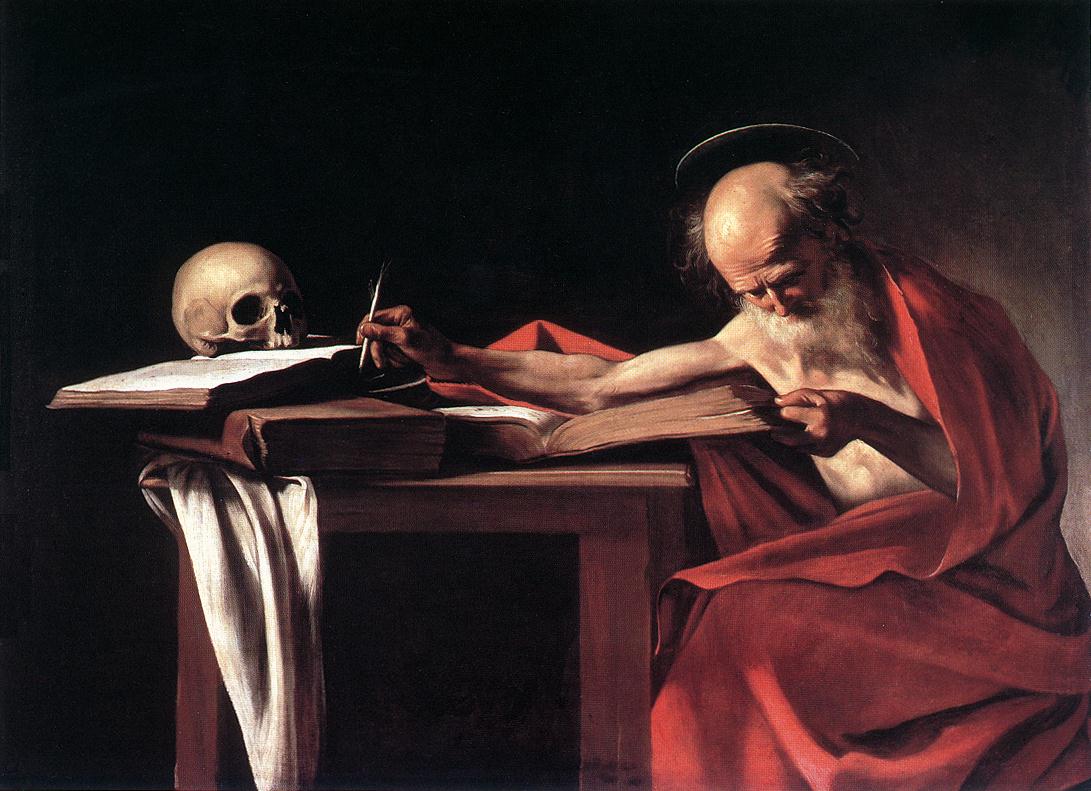
Jerome was a mid 4th to early 5th century church father widely known for his linguistic skill which he utilized to translate the Bible into Latin (the common language of the time). This translation is known as the “Vulgate.” In addition to being a linguist, he was also a historian and theologian. He began a historical work called “Chronicle” in 380 AD. This work was mentioned in my previous post on “Prosper of Aquitaine” as Prosper was a legacy contributor to this work. Jerome was born in Stridon (Dalmatia) in 347 AD and died in 420 AD at Bethlehem. He was a voracious writer and much of his body of work has survived antiquity. His writings consisted many commentaries, letters, homilies and both canonical and extra-canonical translations. The selections for today are taken from “Letter 53.4” and “Homilies on Mathew 85.” I selected these two pieces because they give a good overview of the purpose and focus of the biblical office of prophet/seer, which is simply the revelation of Christ.
The church has real eyes: manifestly its churchmen and teachers who see in the holy Writ the mysteries of God, and to them applies that scriptural appelation of “seer.” It is correct, then, to call these seers the eyes of the church. Homilies on Matthew 85
In him [Christ] are hidden all the treasures of wisdom and knowledge. He also who was hidden in a mystery is the same that was foreordained before the world. Now it was in the law and in the prophets that he was foreordained and prefigured. For this reason too the prophets were called seers, because they saw him who others did not see. Letter 53.4
As stated earlier, Jerome was a prolific writer and thus will be a regular guest in the “Introducing the Church Fathers” series.
Update – Short Term hiatus
Hello!
I’d like to start off by thanking you for continuing to read this blog. I sincerely appreciate each one of you who have read, commented and shared my posts with others. I’ve made quite a few new friends and look to make many more in the future.

Today is Monday 7/14/14, which means that a “Mining the Parables Post” on the “Prodigal Son (Chapter 3)” was supposed to be released today. I must apologize as I am still working on that post. I promise you that it is not because I am lazy or losing interest in this blog, but because my wife recently gave birth to our second son Elijah. He’s a healthy little guy and is doing well (except for gas pains…thankfully the medicine is working). The joy that comes with the blessing of children is always accompanied by additional responsibilities. Getting Elijah into a routine has proven difficult especially considering his big brother Dylan has been fighting a virus for 8 days. Handling the care of two small children (and trying to keep them apart so that Dylan doesn’t give his virus to Elijah), a wife that is recovering from a c-section in addition to my normal day job equals my exhaustion…which leads to the purpose of this post.
I have not had the appropriate time necessary, this past week or so, to invest into research and writing for this blog.
I generally like to have posts written a week in advance which gives me adequate time to proofread and edit before releasing. Today’s scheduled post on the prodigal son is about 25% done. That being said, I hope to have it completed and return to schedule next Monday barring any unforeseen set backs on the home front.
Thank you for bearing with me.
It is not my intention to complain about the blessings God has given me through my family and I really hope I am not coming off that way. I simply wanted to let it be known why new material wasn’t being released on schedule.
I hope you all have a wonderful week.
See you next Monday!
Introducing the Church Fathers – Cyril of Alexandria
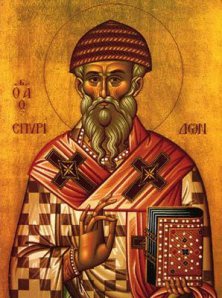 Cyril was an early fifth century Patriarch of Alexandria, serving from 412 to 444. Cyril was most known for his Christological disputes with Nestorius which lead to his involvement at the first council of Ephesus (431) and resulted the in deposition of Nestorius as Patriarch of Constantinople. The dispute dealt with the hypostatic union and centered on whether the virgin Mary could be called Theotokos (God-bearer) or Christotokos (Christ-bearer). Nestorius coined Christotokos (Christ-bearer) seeking to find middle ground between those who deny the full deity of Jesus and those who affirm it. This view lead to both Nestorius and his phrase Christotokos being ruled as heretical in Canon’s 1-5 at the first Council of Ephesus. Cyril was known to be a prolific writer and thankfully, many of his works have survived antiquity. He wrote much on the trinity and the hypostaic union as well as several commentaries on the Old Testament, the Gospel of Luke and the Gospel of John. The first volume of a modern English translation of his commentary on the Gospel of John (translated by David R. Maxwell and edited by Joel C. Elowsky) was recently released (and can be found here). Today’s selection is taken from this very work as found in “Book 1” on pages 4 through 6. (more…)
Mining the Parables – The Lost Coin (Chapter 1b)

The Parable of the Lost Coin and the Lost Sheep are two parts of the same parable. The Lost Sheep is considered Part “a” while the Lost Coin is considered Part “b.” The audience, plot and ending are quite similar. I considered grouping these together in one chapter, but thought it wise to keep them separate as there are subtle and unique differences between the two. The text is found in Luke 15:8-10 and is as follows…
“Or what woman, having ten silver coins, if she loses one coin, does not light a lamp and sweep the house and seek diligently until she finds it? And when she has found it, she calls together her friends and neighbors, saying, ‘Rejoice with me, for I have found the coin that I had lost.’ Just so, I tell you, there is joy before the angels of God over one sinner who repents.”
Jesus begins this section in like manner by asking a similar rhetorical question. This is done not only to acknowledge the women in the audience by directing a question to them (as opposed to the men in Luke 15:4), but also to parallel the man from the Lost Sheep with the woman from the Lost Coin. Jesus is the true picture of the man in the Lost Sheep parable and the church, his bride, is the true picture of the woman in this, the Lost Coin, parable. The Lost Sheep parable speaks to Jesus’ loving concern and care for the sheep which was lost, while the Lost Coin parable speaks to the church’s diligence in reaching the lost as she turns the light on and sweeps the house diligently to find the coin. Both the sheep and the coin are representative of the unrepentant sinner. One particularly important difference is the value assigned to the coin when compared to the sheep. The sheep was 1 out of 100 while the coin was 1 out of 10. We will see next week, in the Parable of the Prodigal Son, that the value is further increased to 1 out of 2. This is important because as humans, we are likely to think losing 1% is small and insignificant in size, so it could be easily withstood. Now considering the woman and her coins, 10% is a much larger hit and thus a more difficult loss. Now thinking ahead to next week, 50% is a huge hit and thus splits a family. As Jesus continues, the value he places on the unrepentant sinner increases.
Much has been discussed concerning the true meaning behind the light and the broom and while it may lend to reading too far into the parable, I think it is safe and helpful to say that they are the tools in which we, the church, are given to help find the lost. The heavenly tools the church is given to work repentance are found through the proclamation of the law and the gospel. The law both condemns and exhorts to good works while the gospel gifts freedom from the weight of the law and motivates one to strive toward good works. Both proper preaching of the law and the gospel are necessary proclamations to bring the unrepentant sinner to true repentance. Therefore the true church searches diligently for the lost through the preaching of the law and the gospel.
The resulting celebration upon finding her lost coin elicits a similar response to that of the man finding his lost sheep. Overwhelming joy. Sadly, the result that caused great rejoicing in heaven only garners murmuring and malcontent from the Pharisees (Luke 16:14) in the presence of Jesus as he spoke these very parables. By telling this parable to a crowd full of sinners, Jesus uses the very same tools as the woman used to find the coin; the law and the gospel. This is the job of the church; to utilize these tools as the means to call lost sinners to repentance.
The message of the Parable of the Lost Sheep and Lost Coin deal with repentance. Each of the following parables build on what follows after repentance. Please tune in next week for “Chapter 2 – The Prodigal Son.”